ABB has announced its acquisition of Canadian company Real Tech, a leader in real-time water quality monitoring and optical sensor technology. This acquisition, set to close in Q1 2024, enhances ABB’s presence in the water sector and adds critical smart water management capabilities to its portfolio. Real Tech’s innovative solutions, with over 10,000 installations globally, will position ABB to capitalize on growth opportunities driven by the global emphasis on sustainable water management. Financial details of the deal were not disclosed.
Laboratory-based and online water analysis systems are 2 approaches for monitoring and measuring water quality. The laboratory-based systems segment is expected to lead the global water analysis instrumentation, due to their multiple advantages. Laboratory-based systems are widely used to test various water quality parameters in controlled laboratories. They deliver accurate and precise results. However, their time-consuming and expensive nature reduces their popularity to a certain extent, resulting in a minor reduction in the projected CAGR.
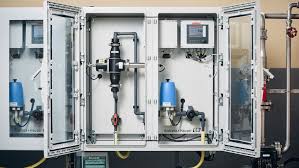
Online systems are gradually gaining popularity as they can provide real-time water quality monitoring and reduce overall costs. These systems typically use sensors to measure water quality parameters, including turbidity, pH, and dissolved oxygen. Several end user industries are shifting their preference towards online systems to get real-time water quality monitoring. These systems can also be automated to reduce labor costs, further encouraging their adoption. Online water analysis systems are important for continuous process control and early detection of issues. They mostly find usage in applications like cooling, drinking water distribution, and industrial wastewater treatment systems. Ever rising adoption of these applications is expected to improve the share of the online systems segment. Increasing concerns about water safety, stringent regulations, and technological improvements are probable to drive a major expansion in the market.
European countries have a strong research and development network that benefits the water quality instrumentation business. The region is home to many world-class universities, research institutions, and innovation hubs that collaborate extensively with industrial partners. This academic and industrial partnership fosters a continual stream of advances, including basic research in analytical chemistry and technologies for sensors to the development of novel monitoring approaches and applications. The availability of these research ecosystems attracts top talent from throughout the globe, bolstering Europe’s prestige as a leader in this field of study.
Europe has long been at the cutting edge of safeguarding the environment activities, with a strong emphasis on water resource management and preservation. This concentration has caused a strong domestic market for water quality instruments, as municipalities, industries, and environmental agencies engage substantially in monitoring and preserving water quality. The region’s policies to solve issues such as water pollution, eutrophication, and the effects of climate change on water resources fuels the need for efficient systems for monitoring.
The increasing need for effective water quality control in both the municipal and industrial sectors is one of the main factors driving the market for water quality instruments. As globalization and expansion pick up speed, wastewater, agricultural runoff, and industrial emissions all pose a major threat to clean water. Since clean water is essential to the everyday operations of the food and beverage, chemical, pharmaceutical, and power generation industries, water quality surveillance is essential to both operational performance and regulatory compliance. Government organizations that manage wastewater and supply potable water are under more pressure to fulfill strict quality criteria from regulatory bodies like the US Environmental Protection Agency (EPA) and the European Environment Agency (EEA). The need for continual water quality monitoring is being driven by growing awareness of waterborne illnesses, environmental degradation, and the importance of water conservation. As a result, there is a requirement of contemporary water quality sensors that can deliver data in real time, an essential component of proactive water resource management.
The way water resources are monitored and managed is evolving as a result of IoT, AI, and data analytics being integrated into water quality equipment. Businesses are able to promptly detect changes in water quality and address any issues with the help of IoT-enabled water monitoring devices, which offer constant real-time data gathering and remote monitoring abilities. Additionally, such systems include predictive analytics and automatic alerts, that can help avoid contamination or equipment failure by identifying patterns and abnormalities prior they lead to serious problems. Furthermore, the developing trend of smart cities and digital transformation in sectors opens up numerous prospects for market expansion. Water management is a key factor to be taken into account in the growing number of larger smart city infrastructure projects that include water quality monitoring. AI-powered data analysis helps industry and utilities maximize water use, cut waste, and make sure environmental regulations are followed. Additionally, new opportunities are being created in underserved and rural areas where traditional water monitoring facilities are hard to come by, due to the development of portable and user-friendly water quality sensors.
Advanced water quality equipment, particularly those with IoT connectivity, real-time monitoring, and multi-parameter analysis, typically need a considerable financial investment. Smaller communities, budget-conscious businesses, and poor countries may struggle to afford these complex solutions. In addition to the high beginning price, recurring fees for restoration, calibration, and instruction for employees can put a financial strain on many enterprises. Furthermore, limited infrastructure, particularly in distant or underdeveloped locations, impedes the broad use of these tools. Many locations still lack the connectivity and technical infrastructure needed for advanced water quality monitoring systems, such as IoT-enabled sensors.
Numerous Industries, environmental agencies, and water management authorities are increasingly demanding real-time data from several places. Portable equipment provides fast testing at the source, be it a river, lake, industrial discharge point, or municipal water supply. This on-the-spot analysis capability is critical for timely decision-making and responding to water quality issues. Modern portable gadgets frequently include modern sensors, microprocessors, and data analytics capabilities that were previously only found in bigger, stationary laboratory equipment. These developments have reduced the performance difference between portable and benchtop instruments, rendering portable choices more appealing for a variety of applications.
The pH measurement segment is expected to dominate the global water quality instruments market due to its critical function in determining water quality. pH, that determines the acidity or alkalinity of water, is an important characteristic that influences many wastewater-related activities and operations. Accurate pH assessment is critical for assuring the efficacy of water treatment operations, controlling chemical dosing, and protecting aquatic habitats.
The growing shortage of clean water resources, along with severe environmental rules, has made water treatment an absolute must. As populations increase and urbanization spreads, the demand for safe and potable water rises. In addition, industries ranging from manufacturing to pharmaceuticals demand treated water for their operations, which boosts the market further. Moreover, technical improvements in water treatment procedures, such as membrane filtration and reverse osmosis, are increasing efficiency and cost-effectiveness, propelling market expansion. The demand for continuous, real-time water quality assessment in these facilities is also increasing, as it enables fast reaction to any quality issues.