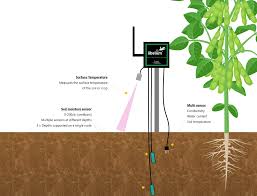
The Soil Moisture Sensor Market is driven by the rising global population and the increasing need for sustainable agricultural practices, emphasizing water conservation. Advancements in sensor technology, including wireless connectivity, IoT integration, and enhanced accuracy, have accelerated adoption in the agriculture sector. These sensors, integral to automated irrigation systems, reduce manual intervention while ensuring optimal water delivery to crops. As climate change alters weather patterns and impacts water availability, soil moisture sensors are crucial for efficient farming. Over 25% of global irrigated land employs soil moisture monitoring technology, with agriculture accounting for over 60% of market demand. Additionally, non-agriculture applications, such as landscaping and environmental monitoring, are steadily contributing to the market’s growth.
Soil moisture sensors are transforming irrigation practices by providing real-time data to optimize water usage, reducing wastage, and promoting sustainable farming. Agriculture, consuming 70% of global freshwater, faces growing pressure to adopt efficient water management. These sensors help farmers avoid over-irrigation, minimizing soil erosion and plant health issues while applying water precisely where needed. Studies show irrigation water usage can be reduced by 20-50% using this technology, especially when integrated with automated systems. As water scarcity intensifies, particularly in arid regions, soil moisture sensors are vital for sustainable agriculture, supporting resource conservation and meeting the global demand for water efficiency.
In 2023, the tensiometers segment led the market with a 32.06% share, driven by their precision and reliability in measuring soil water potential, essential for efficient irrigation. Their real-time soil moisture data enables farmers to optimize water usage and boost crop yields. Known for their cost-effectiveness and ease of installation, tensiometers are widely adopted across the agricultural sector, catering to both large-scale agribusinesses and smaller farms, making them an accessible solution for sustainable water management.
In 2023, the wired segment dominated the market with a 54.3% share, favored for its reliability, accuracy, and longer lifespan compared to wireless alternatives. This reduces maintenance needs, offering a cost-effective solution for farmers. Wired systems ensure stable connectivity and consistent data transmission, even in harsh agricultural conditions. Their resilience to extreme weather and soil variability, combined with their ability to deliver real-time, interference-free data, makes them ideal for large-scale and precision farming operations, driving their widespread adoption.
In 2023, North America held the largest market share at 38.02%, driven by its advanced agricultural sector and widespread adoption of precision farming to tackle challenges like water scarcity and inefficient irrigation. This demand for soil moisture sensors is further supported by strong investments in research and development, fostering innovations in sensor accuracy and connectivity.
The Asia Pacific region is poised for rapid growth, fueled by government initiatives promoting sustainable farming and growing awareness of climate change impacts. The affordability and technological advancements in soil moisture sensors are accelerating adoption, with countries like India and China seeing a 20% increase in farmers using advanced irrigation technologies, driving market expansion.