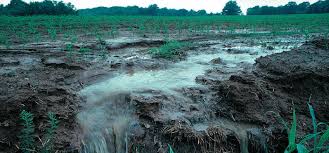
Chandigarh: Expressing concern over the findings of a study conducted by Indian Institute of Technology (IIT), Mandi, which uncovered water pollution in Punjab due to agricultural runoff, the National Green Tribunal (NGT) has issued notices to different departments of Punjab — Punjab Pollution Control Board (PPCB), departments of water supply and sanitation and agriculture and farmers welfare. The Central Pollution Control Board and IIT-Mandi have also been impleaded parties in the case.
The PPCB has been directed to file a report in response to facts disclosed in the study, including the issue of heavy metals, radioactive substances, pesticides and chemical pollutants found in the groundwater of the concerned area in sample testing within six weeks.
The tribunal had taken suo motu notice of a TOI news report ‘Agricultural Runoff Causing Groundwater Pollution in Punjab, Making Drinking Water Unsafe, Reveals Study’. The study highlighted an increase in demand for groundwater, local farmers exploiting groundwater from deeper geological strata which have heavy metals and a few are radioactive, having serious health impacts. Such incidents relating to the decline in water quality are mainly in the southwestern region of Punjab.
The study stated that Punjab, once celebrated as the “bread bowl of India”, is now referred to as the “cancer capital of India”, reflecting the dire consequences of water pollution and its impact on human health. It called for immediate action by the authorities concerned to investigate the quality of groundwater for drinking and irrigation purposes.
The PPCB sought time to examine the report and file its reply before the tribunal. It submitted that Punjab groundwater is being monitored regularly by the department of water supply and sanitation to supply drinking water to the people. It added that the data related to usage of groundwater from deeper geological strata, which is allegedly used by the farmers, might be available with the department of agriculture and farmers welfare, hence both departments would be in a better position to provide insights into the matters raised in the study.
It was noted that the board is actively monitoring groundwater quality at 46 different locations. However, the tribunal observed that while the PPCB claims to be monitoring groundwater quality at various locations, they were unable to provide the current water quality status.
The case is scheduled for its next hearing on January 18, 2024.
We also published the following articles recently
Corporation to stop groundwater use by industry in 2 years, supply treated water. The Ahmedabad Municipal Corporation (AMC) plans to supply treated water to textile units in order to prevent them from drawing groundwater. The AMC will set up a 180 million litres per day (MLD) tertiary treatment plant at Pirana and lay a pipeline network to supply the treated water to industrial units. A recent study found a correlation between land subsidence and depletion of groundwater in the area.105053266
Delhi: Fire department starts sprinkling water at 13 pollution hotspots. The Delhi Fire Services has begun a water-sprinkling operation at 13 pollution hotspots in the city to tackle the air pollution crisis. The hotspots were chosen based on the average concentrations of PM10 and PM2.5 pollutants. The operation aims to settle dust and 12 fire tenders have been deployed for this purpose. The air quality in Delhi has worsened, with the AQI reaching 423, falling into the ‘severe’ category. In response, the government has implemented emergency measures, including restrictions on polluting vehicles and construction activities. The odd-even car rationing scheme will also be implemented from November 13 to 20.105014767
As fertile fields lie barren for 40 years, farmers seek to stop river water pollution by industriesFor the past 40 years, farmers in Jaitpur and Gadhwara villages in Pali district, India, have been unable to grow crops due to their agricultural land losing fertility. The cause was discovered to be the pollution of the Bandi River by untreated industrial waste, mainly from the textile industry. The high presence of toxins in the underground water has made the land barren, forcing farmers to rely on rainwater for irrigation. Despite attempts to seek justice through the courts, the farmers have yet to receive relief or compensation.