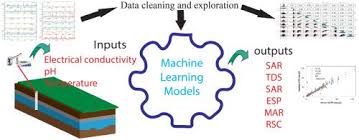
With the expansion of human industrial activities, heavy metal contamination in groundwater environments has become increasingly severe. Environmental management agencies invest significant financial resources into groundwater monitoring, primarily due to its inherent invisibility. Automatic monitoring is a new way to monitor groundwater, the existing sensors often can only achieve simple indicators, and it is difficult to achieve complex indicators such as heavy metals. This study integrated pH and conductivity online monitoring probes with machine learning algorithms to develop a real-time, automated heavy metal prediction system for groundwater. The predictive performance demonstrated that the highest R2 values for chromium (Cr), nickel (Ni), and copper (Cu) were 0.73, 0.78, and 0.87, respectively, with mean absolute errors of 11.9, 0.83, and 1.02 μg/L. While random forest and extreme gradient boosting (XGB) models demonstrate greater robustness. To enhance the practicality and management significance of the prediction system, interval prediction is employed. Uncertainty assessment results indicate that the performance order of prediction intervals across different models is XGB > Random Forest > Multiple Linear Regression (MLR) > Backpropagation neural network (BP). We proposed that Groundwater risk is acceptable when the prediction interval of pollutants falls below regional screening levels. The integration of automated sensors with machine learning algorithms can offer advanced recommendations for long-term environmental monitoring.
The selection of experimental area is a critical step in the development of groundwater online monitoring system. Two typical micro industrial parks, Mayuan Industrial Park and Haixi Industrial Park in Wenzhou, Zhejiang, China were screened to determine their levels of contamination. Mayuan Industrial Park is mainly engaged in leather processing with an area of 0.45 km2, and Haixi Industrial Park is mainly engaged in the electroplating industry with an area of 0.36 km2. The relative position of.
In this study, chromium (Cr), nickel (Ni) and copper (Cu) concentrations in different groundwater monitoring wells in two industrial parks were detected. The data distribution was visualized using box plots with Fig. S4, and the time trends were visualized with Fig. S5. Both industrial parks exhibited Cr concentrations exceeding the GB/T14848 standard (100 μg/L), with ranges of 7.7–298.9 μg/L (Haixi) and 6.7–150.1 μg/L (Mayuan). Nickel (Ni) contamination was particularly severe in Haixi, where.
In this study, we focus on building a model for predicting the concentration of heavy metal in groundwater by using sensors to automatically monitor water quality indicators in real-time. The following conclusions can be drawn. First of all, there is a significant correlation between EC or pH and heavy metals in groundwater, which are affected by the regional environment and surrounding pollution sources. Secondly, machine learning demonstrates significant potential for environmental pollutant.