In 2020, when the world was struggling with the coronavirus disease pandemic (COVID-19) and businesses were closing, Binod Kumar Mahto, who had been associated with the marketing department of a bank in Pune for a decade, decided to return to his village in the Hazaribagh district of Jharkhand.
The first challenge after returning was to find a permanent source of income. Mahto, who hails from the Churchu block of the district and belongs to a farming family, says, “We thought of doing something that required unskilled workers. After coming back to Jharkhand, I realised that these non-skilled workers form a chunk of unemployed workers in the state. Farming is the primary occupation in Jharkhand, so we decided to explore possibilities in that sector.”
Mahto, a Physics Honours graduate and MBA, tells Mongabay India, “I could not find such a large piece of land near my house, so we scouted for land in the Daadi block. We leased the land and started farming using modern techniques in September 2020. Since I lived in a modern city which enabled me to develop modern thinking, I wondered why I should farm in a traditional way.” He started growing vegetables on 10 acres of land, and today, he is farming on 20 acres.
Mahto now has three gardens: Sundarban Krishi Vatika (10 acres), Vrindavan Krishi Vatika and Madhuban Krishi Vatika (five acres each). He installed lights, cameras and water systems powered by solar energy to modernise these farms.
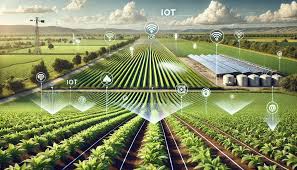
All three farms have a tool to detect soil moisture. In Sundarban, the entire irrigation system is automated; instructions are given through a digital app, and the system operates accordingly.
Mahto has adopted mulching technology to grow vegetables on his farms, where drip irrigation is essential. He covers the top layer of soil, which has many benefits: It saves water, protects the soil from erosion during heavy rains and increases soil fertility. He has also linked drip irrigation to AI, automating the entire irrigation system.
Talking about the system, Mahto says, “There is a tower installed here and I have an app on my mobile. Whatever direction I give through the app is communicated via the tower’s network.”
He further explains, “The Sunderban farm is divided into four plots, each with its own water valve. The soil moisture monitoring system informs me through the app about the moisture or dryness in each plot. If there is a water shortage in the second plot, I can automatically turn on the valve for that plot and irrigation starts. In fact, I can start and stop the motor through my mobile.”
The automatic irrigation system installed in Sundarban is from Cultyvate, a Bengaluru-based company that offers various services to farmers. The company claims that using its irrigation system can increase yield by 20% and reduce water uses for irrigation by 50%.
Anant Bahadur, principal scientist at the Vegetable Production Division at the Indian Vegetable Research Institute, Varanasi, says that adopting AI has many benefits. He tells Mongabay India, “There are three big advantages. First, one can detect diseases in advance and control them. The second advantage is that with the help of sensors or AI, crops can receive precisely the amount of water they need. The underground sensors can make 100% accurate predictions. The third advantage is that accurate information about soil nutrients is available. The use of AI has increased in developed countries and is rising here too. In the coming years, everything will be done through sensors and AI.”
Bahadur says, “Many types of diseases occur due to the change in weather. If it rains in winter, some diseases may affect plants. AI will provide this information.”
Mahto says that in the initial days, while researching on the internet, he learned about the schemes promoted by the National Bank for Agriculture and Rural Development (NABARD). “When I came to know about automated irrigation technology, I contacted NABARD.”
“It was our project under which he (Mahto) got financial help through IFFCO (Indian Farmers Fertiliser Cooperative) for Internet of Things (IoT),” says Richa Bharti, district development manager of NABARD in Hazaribagh district, while talking to Mongabay India. She informs that with such technology, weather forecasts are available in advance, which benefits the farmers. Also, one can know about the nutrients present in the soil.
Suraj Sinha, senior manager at IFFCO-Kisan Finance Ltd, a non-banking financial company promoted by IFFCO, tells Mongabay India, “We found that while drip systems were being installed, the farmers had no control over irrigation, which was being done for four to five hours daily. We conducted a pilot project and found that irrigation was required once every two or three days. This helped save water as well as electricity.” He adds that technology can help farmers to know when the plants need water.
He adds, “The water requirement of crops varies at each stage. The need for water is the most at the time of ripening. Effective water management will help in keeping 90% of crops healthy. It will also reduce the risk of infection in crops.”
IFFCO-KISAN has installed IoT sensors in more than 200 farms in 15 states so far and has helped install automated irrigation systems in more than 50 farms. “Precision Farming with the help of sensors helps to cope with the effects of climate change and is very helpful to reduce input cost up to 25 to 30 % and increase output by 30 to 40%,” a note from IFFCO Kisan claims.