Clean water is a critical resource, but ensuring its safety requires constant monitoring. Traditionally, water testing has relied on manual sample collection and lab analysis—a slow, costly, and sometimes inaccessible process. However, the rapid advancement of artificial intelligence and machine learning is transforming how we approach water safety. Today, machine learning water testing offers a powerful solution for real-time contaminant detection, promising to replace traditional lab methods with AI-driven systems.
The Problem with Traditional Water Testing
Water contamination is a global concern, ranging from chemical pollutants and heavy metals to microbial threats. Standard laboratory testing, while accurate, comes with several limitations:
Time-consuming: Results often take hours or even days.
Cost-intensive: Lab equipment and skilled labor are expensive.
Limited accessibility: Remote or under-resourced areas may lack access to reliable testing facilities.
These limitations pose serious challenges, especially during emergencies like industrial spills, natural disasters, or outbreaks of waterborne diseases.
How Machine Learning is Changing the Game
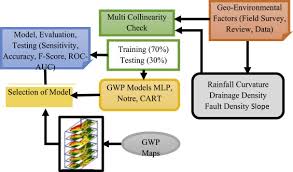
Machine learning water testing systems use data from sensors and advanced analytics to detect patterns and anomalies in water quality metrics such as pH, turbidity, conductivity, temperature, and more. By training algorithms on vast datasets of known contaminants, these systems can accurately classify the presence of hazardous substances.
Some key technologies involved include:
Supervised learning for identifying known contaminants based on labeled data.
Unsupervised learning to detect novel or unexpected anomalies in water samples.
Computer vision for analyzing microscopic images of pathogens or particles.
Edge AI for performing on-site analysis without needing internet connectivity.
This allows for real-time contaminant detection, enabling faster response and better protection of public health.
AI as a Lab Replacement
The concept of an AI lab replacement isn’t science fiction—it’s already taking shape. Smart water testing devices embedded with AI chips can continuously monitor water sources and deliver instant alerts if contamination is detected. These devices offer:
Continuous monitoring instead of periodic checks.
Portable, low-cost solutions suitable for field use.
Scalable deployment across rural, urban, and industrial settings.
For example, a smart sensor array deployed in a municipal water system can detect a spike in heavy metals or harmful bacteria within minutes, triggering automatic alerts to water managers and residents. This level of responsiveness is simply not feasible with traditional lab methods.
Real-World Applications
Several startups and research initiatives are leading the way in applying AI to water safety:
Smart filtration systems that adjust in real time based on detected contaminants.
Autonomous drones or robots that sample water bodies and analyze data on the fly.
Public health dashboards that visualize water quality trends in real time.
Governments and NGOs are also investing in these technologies to monitor drinking water, irrigation supplies, and aquatic ecosystems more effectively.
Challenges and the Road Ahead
While promising, this approach is not without its challenges. Key hurdles include:
Data quality and diversity: Machine learning models require extensive, representative datasets to be reliable.
Sensor accuracy: AI is only as good as the data it receives.
Regulatory compliance: Standards must evolve to accommodate AI-based methodologies.
Despite these challenges, the benefits of real-time, AI-powered water testing are too significant to ignore. As technology improves and costs decrease, machine learning water testing could soon become the global standard.
Conclusion
The integration of AI into water safety is a transformative step forward. With real-time contaminant detection, communities can respond faster, prevent illness, and ensure access to clean water—no matter where they are. As the technology matures, the dream of an AI lab replacement for water testing is becoming a practical reality.