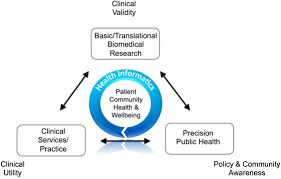
“Precision public health” (PPH) emerged in 2015 as a charismatic vision to revolutionize traditional public health with data-driven solutions to the world’s most challenging public health problems. A central goal of PPH is to use population-level data to improve health equity by targeting geographically localized at-risk populations. For this article, we conducted a scoping review to investigate whether and how PPH approaches were used for Covid-19 pandemic response and how they incorporated health equity goals in their approaches. We found that during the Covid-19 pandemic, discussions of PPH in the academic literature mostly focused on potential future implementation of PPH rather than on-the-ground Covid-19 pandemic response. In the few articles that described a research project and/or public health intervention at the intersection of PPH and Covid-19, researchers articulated PPH together with three sets of Covid-19 era public health practices: 1) vulnerability indexes; 2) near real-time surveillance; 3) pathogen sequencing. In each of these articulations, the most common method for achieving health equity was using epidemiological surveillance data to create risk stratification to direct resources to the most vulnerable. As these new articulations are tentative and have not yet become common in public health literature and policy, the article ends with a critical call to interrogate which versions of health equity are enacted and foreclosed in data-driven approaches to public health and how PPH can best serve vulnerable populations.
In this article, we look at how PPH has been defined by researchers and public health actors during the Covid-19 pandemic and identify three Covid-era public health practices that have been articulated with the imaginary of PPH in public health research: 1) vulnerability indexes, 2) near real-time public health surveillance, and 3) pathogen sequencing. Influential sociologist Stuart Hall defined articulation as a historically contingent link between two or more disparate elements or practices that must be constantly renewed or the connection can disappear . Rather than assuming that social formations are natural or inevitable, Hall suggests that we investigate “the political-cultural work (practice[s]) that [goes] into making and sustaining specific articulations” . When researchers call their projects “precision public health” they perform the political-cultural work of connecting their research to a desirable high-tech future for public health, potentially increasing their research profile and opening up opportunities for funding. In doing so, they strengthen the imaginary of precision public health by providing evidence of the efficacy of PPH approaches to Covid-19.
Here we describe how vulnerability indexes, near real-time public health surveillance, and pathogen sequencing have been articulated with PPH and identify the visions of health equity they present. As Hall emphasized, these articulations are not inevitable or permanent, but are historically contingent and may become strengthened, eroded, or re-articulated as public health frameworks and priorities change. As you will see below, these novel articulations between Covid-era public health practices and PPH are new and tentative. It remains to be seen whether they will be strengthened to become lasting frameworks in public health or whether these practices will be articulated with another yet-to-be-realized paradigm for public health. However, given the power of the precision imaginary to drive investment in the present, it is important to continue to interrogate these charismatic proposals for the future of public health.
In the literature on PPH and Covid-19, we found that the definition of PPH has remained mostly stable from its introduction in 2015 through February 2024 . Although still broadly defined and somewhat nebulous, PPH during the Covid-19 pandemic is defined as data-driven, up-to-the-minute public health interventions that target public health problems in populations, often delimited by geography and population characteristics.
During the Covid-19 pandemic, the definition of PPH remained stable; however, PPH was still often framed as future-oriented with very few studies that applied PPH to Covid-19. For the few that have been published, we found that authors articulated the imaginary of PPH together with the Covid-era public health practices of vulnerability indexes, near real-time public health surveillance, and pathogen sequencing, demonstrating the relevance of PPH for pandemic response. In all but the Hawaiian example, the vision of health equity that emerges from this research is one where epidemiological surveillance data is used to create risk stratification to direct resources to the most vulnerable—an approach that fails to address the structural causes of increased exposure and severe outcomes.
While our analysis shows that data-driven PPH methods can be compatible with community-centered approaches in ways that strive toward health equity, it remains crucial to address the structural causes of unequal vulnerability and to address how inequalities can be (re)produced by the data itself. Even when a data-driven approach might be an effective public health strategy, it is important to consider how populations are counted, who and what is left out, what biases are (re)produced, and ultimately, whose lives are protected and whose lives are made vulnerable within data surveillance infrastructures. These are questions that are important to ask throughout the study design, research, analysis, communication, intervention, and assessment stages of the research. If PPH is to make good on its promise to promote health equity, attention to the politics and cost of data, data collection, data analysis, and data infrastructures is needed. In this regard, we were especially heartened by PPH articles that explicitly address data equity, antiracism, and the importance of interpreting data in the “context of the lives, risks, and stories of those whom the data are meant to help”.
Alongside calls for data equity, we would also like to stress that data-driven risk stratification is not the only vision of health equity possible. While vulnerability indexes and real-time surveillance might help distribute limited resources in an emergency, this approach should not be seen as the default solution for endemic public health problems and long-term community-based work. Although investment in data infrastructure may help triage in a pandemic, it must be paired with a commitment to addressing the upstream social determinants of health and understanding people in vulnerable communities as active agents of change, rather than passive subjects of public health surveillance. Whether PPH is a flash in the pan or here to stay, it is important to continue to consider whether and in what circumstances investment in PPH can support health equity goals or whether public health dollars are best invested elsewhere.