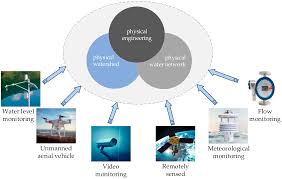
Cities face increasing stormwater challenges due to rapid urbanization, climate change, and aging infrastructure (Kerkez et al., 2016). As impermeable surfaces grow, less water is absorbed, leading to greater stormwater runoff. When drainage systems are overwhelmed by heavy rainfall, urban flooding occurs, causing water to accumulate in streets and low-lying areas (Committee on Urban Flooding in the United States, Program on Risk, Events, Policy and Global Affairs, Water Science and Technology Board, Division on Earth and Life Studies, & National Academies of Sciences, Engineering, and Medicine, 2019). Aging infrastructure further worsens the issue, as outdated systems struggle to handle rising demands and extreme weather events. At the same time, pollutants from stormwater runoff, such as nutrients and sediments, degrade aquatic habitats (Booth and Jackson, 1997, Walsh et al., 2005). Combined sewer overflows (CSOs) release pathogens into natural water bodies when storm runoff overwhelms sewer pipes that carry human waste (U.S. Environmental Protection Agency, 2004). These issues are expected to worsen with more severe storms and increasing impervious land cover due to urbanization (Vörösmarty, McIntyre, Gessner, Dudgeon, Prusevich, Green, Glidden, Bunn, Sullivan, Liermann, & Davies, 2010). Effective stormwater management is critical, but current static design practices struggle to keep up with these stressors (Kerkez et al., 2016).
To address these problems, water managers are seeking digital twins of stormwater systems that provide timely and accurate information on hazards like flooding and enable more effective real-time response (Pedersen et al., 2021a, Sarni et al., 2019, Valverde-Pérez et al., 2021). A digital twin refers to a dynamic virtual representation of an actual physical system for real-time monitoring, decision support, and control (Rasheed et al., 2020, VanDerHorn and Mahadevan, 2021). Enabled by advances in low-power sensing and wireless communications, digital twins combine online sensor data with hydraulic models to provide a real-time picture of stormwater dynamics (Pedersen et al., 2021a). These systems promise real-time flood warnings at the street scale (Edmondson et al., 2018, Ford and Wolf, 2020, Kazuhiko and Atsushi, 2018), pre-emptive detection of sewer blockages (Edmondson et al., 2018, Owen, 2023), and active control of valves and gates to prevent CSOs (Montestruque and Lemmon, 2015, Tabuchi et al., 2020, Tao et al., 2020, Valverde-Pérez et al., 2021). By enabling targeted and adaptive stormwater management, these systems address flooding and pollution while reducing the need for expensive infrastructure expansions (Sarni et al., 2019).
However, despite the promotion of digital twins in the stormwater sector, their real-world capabilities remain under-researched. Little published information exists on their design and construction, and few studies have examined the hardware, software, or mathematical techniques needed to build a robust and reliable digital twin system (Pedersen et al., 2021a). Moreover, few studies have assessed their performance under real-world uncertainty. Poor sensor data quality is a persistent concern (Owen, 2023, Pedersen et al., 2021a), and it is unclear if existing digital twin models can detect hazards with the certainty needed for real-time response. Therefore, research is needed to understand how digital twin systems can provide actionable information under real-world conditions where model and sensor uncertainty are significant. This study aims to build and evaluate a complete digital twin for an urban watershed, integrating a physically-based hydrologic–hydraulic model, continuous rainfall forecasts, real-time stream gauge data, and online data assimilation. This study is the first to apply online data assimilation using a Threshold Extended Kalman Filter, which integrates sensor data into a hydraulic model to improve accuracy while concurrently performing anomaly detection to identify and reject sensor faults.
Stormwater models have historically been used for infrastructure planning, such as sizing pipes and reservoirs to mitigate floods and reduce pollutant loads (Butler, Digman, Makropoulos, & Davies, 2018). Water managers use a combination of (i) hydrologic models to predict infiltration and runoff, (ii) hydraulic models to route runoff through the drainage network, and (iii) water quality models to track contaminants (Bedient et al., 2008, Zoppou, 2001). Engineers use computer models such as the…
The proposed stormwater digital twin system integrates a wireless sensor network, an online hydrologic–hydraulic model, and a data assimilation framework to monitor hydraulic states (depths and flows) in urban drainage networks (see Fig. 2). The following sections detail: (i) deployment of the sensor network in an urban watershed, (ii) design and implementation of the real-time hydrologic–hydraulic model, (iii) development of a data assimilation scheme using threshold-based Extended Kalman…
The digital twin model excels in both rejecting sensor faults and improving stormwater model accuracy. Fig. 5 compares the digital twin model (bottom panel, red) with raw sensor data (light gray) and the base model without data assimilation (blue) for storms occurring in January and February 2023. Here, the digital twin model refers to the hydraulic-hydrologic model with data assimilation, while the base model refers to the same model without data assimilation. First, while the raw sensor data….
This study evaluates the practical application of stormwater digital twin models for data quality control, monitoring, and prediction of stormwater depths and discharges within urban drainage systems. With respect to data quality control, the digital twin model reinforced by the Extended Kalman Filter demonstrates exceptional performance, outperforming alternative unsupervised methods. This superiority is evident in ROC curve analysis, where EKF consistently achieves an AUC exceeding 0.99. The…
This study evaluates an end-to-end digital twin system for managing urban drainage hazards. By integrating a wireless sensor network, an online hydrologic–hydraulic model, and data assimilation, the system demonstrates excellent performance in data quality control, prediction of stormwater depths at ungauged locations, and improved near-term forecasts. The digital twin model effectively identifies and removes outliers, surpassing unsupervised methods in sensor fault detection. It also improves….