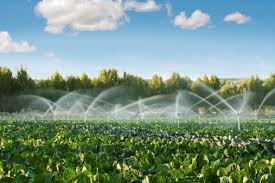
Water is considered the most critical resource for sustainable agricultural development worldwide. Irrigated areas will increase in forthcoming years, while fresh water supplies will be diverted from agriculture to meet the increasing demand for domestic use and industry. Furthermore, the efficiency of irrigation is very low, since less than two third of the applied water is actually used by the crops. The sustainable use of irrigation water is a priority for agriculture in arid areas. So, under scarcity conditions and climate change, considerable effort has been devoted over time to introducing policies aiming to increase water efficiency based on the assertion that more can be achieved with less water through better management. Better management usually refers to the improvement of water allocation and/or irrigation water efficiency. Looking at current and future trends of agricultural production worldwide, it is clear that irrigation is essential to meet current food demand and that irrigation will have to increase in the future. The use of large amounts of water by crops is dictated by the evaporative demand of the environment and is tightly associated with biomass production and yield. Increases in potential biomass production per unit of water transpired during the next 10–20 years will be small despite promises from biotechnology. Breeding for yield potential will also provide a small contribution in the near future, so the real opportunity to increase the productivity of water resides in closing the current large gap between actual and potential yields. To increase the effectiveness of irrigation in a sustained fashion, without detrimental impacts on the environment, a number of measures need to be considered.